Declaration of Cyber Sovereignty
This article is a part of a series on Cyber Sovereignty. Start with this summary.
As life itself becomes inseparably attached to the digital medium through which many modern conversations are transmitted, a seemingly trivial extra, communicating online, is becoming a cornerstone of human communication.
Governments claiming to act in our interest have announced their sovereignty over the internet by annulling the sacred right to privacy within the digital realm. They continue by passing laws imposing speech rules, walling off parts of the internet to only those who show their ID, and controlling the flow of information.
Large-scale dragnet surveillance, recently created speech rules, and the ability of AI to mine through huge amounts of data to look for offenses constitute a new era of privacy invasion.
The cooperation of large-scale internet-based companies on the one hand and governments on the other presents the threat of a centralized, controlled world, contrary to the spirit of the internet itself.
These trends, if continued, bear the risk of people everywhere living lives under constant surveillance and control.
A call to action
As cyber-sovereigntists, we believe the internet is our key to freedom, our undivided digital commons, the immense value of which demand inherent rights and freedoms.
We fight for a world in which everyone is free to be themselves without fear through the power of the internet. Our goal is an internet in which everyone has the right to complete access, to speak, to create and to cooperate in a digital world free from excessive hindrance, or top-down control.
Cyber Sovereignty is an urgent call to action to stand for the rights, freedoms and dignity of every person through the internet, no matter where they are from.
What we fight for
Cyber-sovereigntists believe every human being, regardless of race, creed, or nationality, is equally and inherently valuable and that human dignity demands certain fundamental rights.
Freedom of speech
Freedom from digital access interference
Freedom of action
The right to privacy
The right to anonymity
The right to property
Freedom to benefit from one's own labor
The right of parents to raise children as they see fit
The right to due process of law
The right to choose which set of digital rules one lives under
Interpretation
These rights are a cry for the freedom of every individual who uses the internet as someone of dignity and rights, regardless of nationality, race, or creed. It's a declaration that our rights do not end where a national border begins, and that our dignity is not a privilege granted by institutions, but a universal inherent right.
Imposing on the digital realm
Government systems which have struggled to represent people, have driven division, and proven their archaic nature have declared themselves sovereign over the internet. They have done so by introducing laws that contradict the very idea of democracy.
The U.S. has unleashed global spying.
The UK is arresting 12,000 a year for making online statements which are "offensive," "indecent or obscene," "false," or "sent to cause annoyance", among other provisions. [1] [2]
In "free" European countries, journalists are being sentenced for simply criticizing politicians. [1]
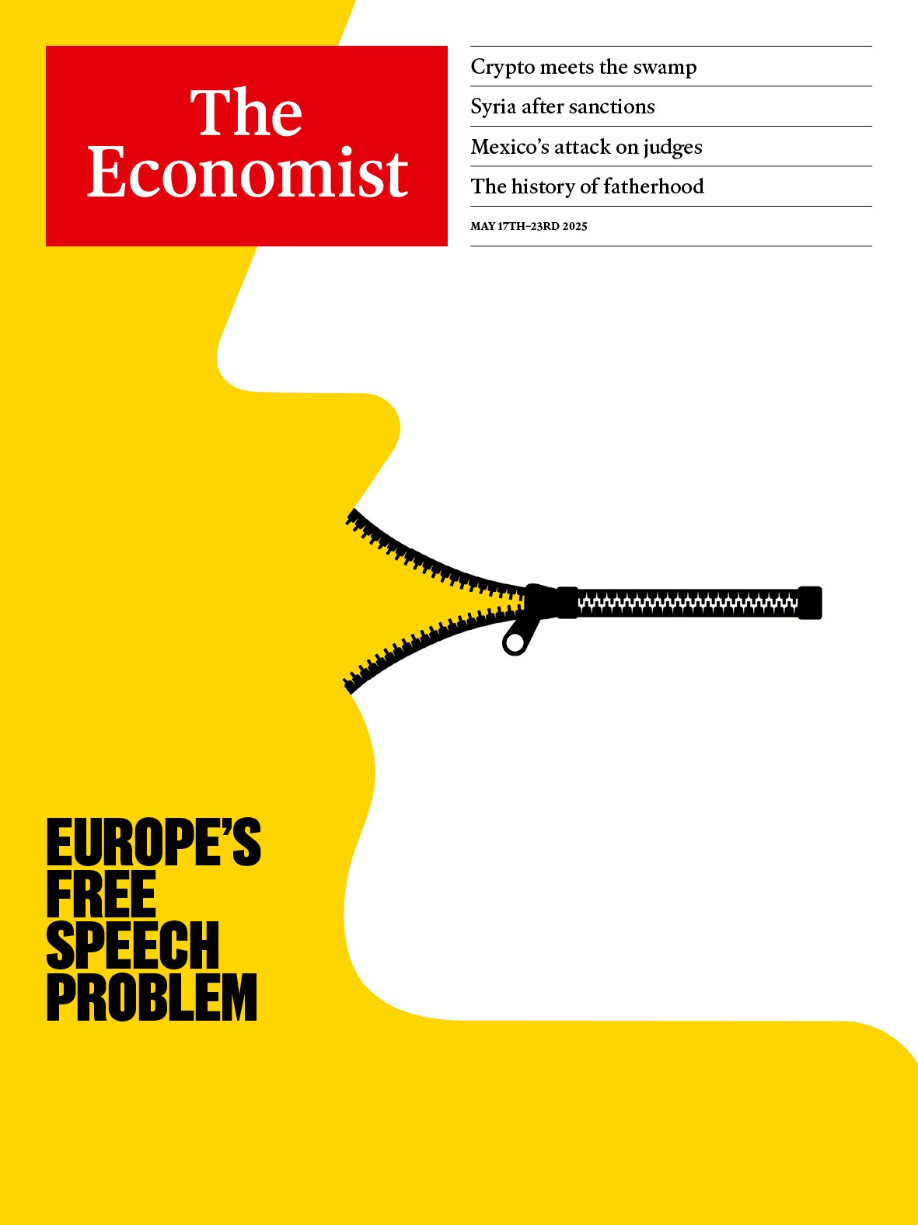
"Suppressing speech with the threat of prosecution appears to foster division." - The Economist
Governments are increasingly turning a free realm into a place of freedom-stifling rules, working together with social media corporations to stifle true diversity of thought and the plurality of human freedom.
The new free realm
Cyber Sovereignty believes that the internet should be its own free domain.
Free to be accessed by everyone
Free from the imposition of a single monolithic culture or value set
Free from the overreaching control of national governments
But how can the internet be turned into a new realm of freedom?
Learn how Cyber Sovereignty turns cyberspace into the foundation of a new form of government here »